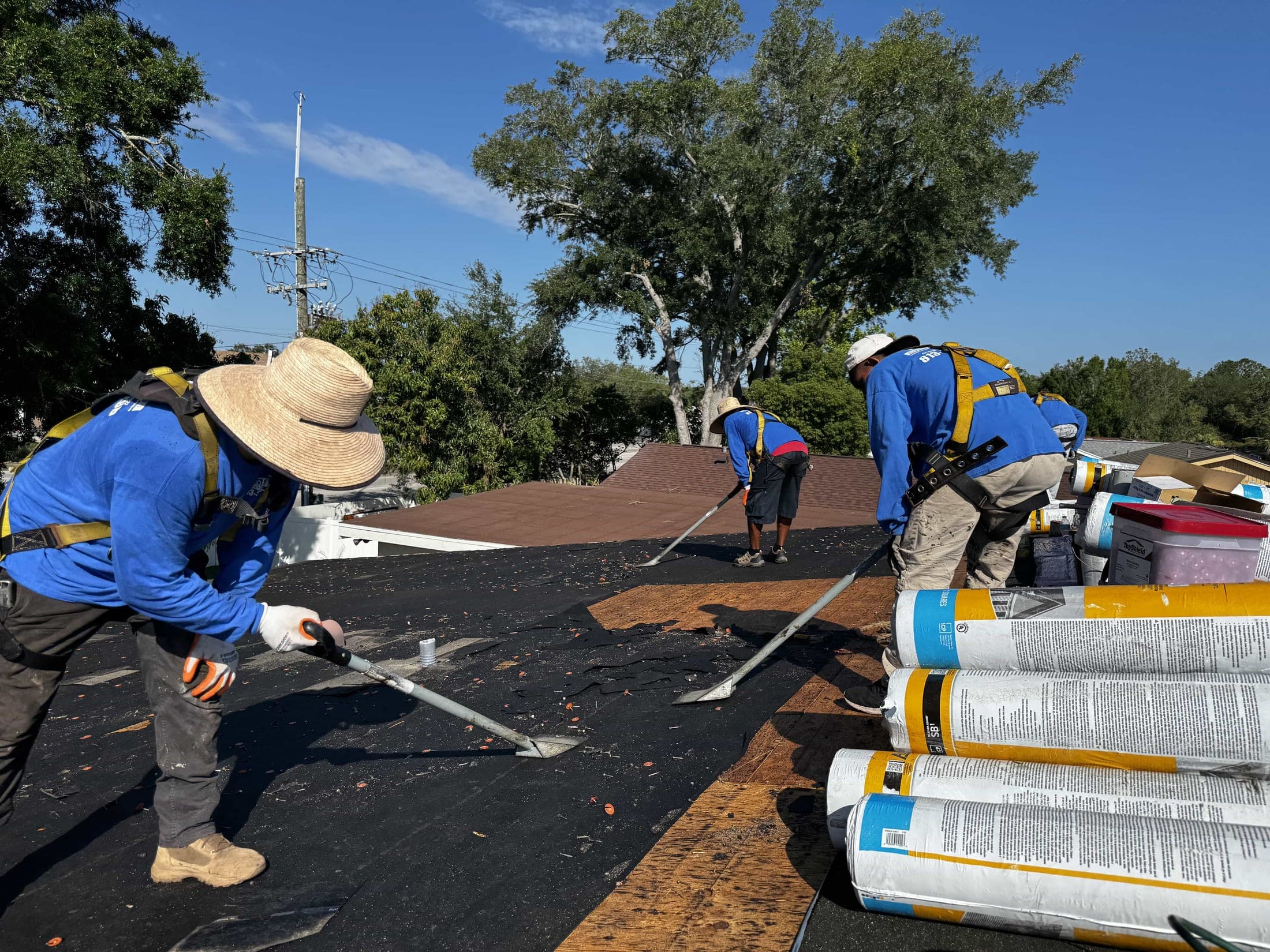
After a storm, the first 72 hours matter more than anything that happens later. Document the damage before anything is touched, stop further water intrusion, notify your insurer promptly, and get a licensed Florida contractor on the roof before you sign anything with anyone who knocked on your door. Below is that sequence in detail.
Hours 0–2: safety first, and stay off the roof
Before you assess anything, clear the hazards. Treat every downed line as energized and call TECO. If you see a sagging ceiling, standing water near outlets, or a bulging drywall pocket, cut power to that circuit and stay out of the room. A ceiling holding trapped water can drop suddenly and weighs far more than it looks.
Hours 2–12: document everything, before anyone touches it
This is the step homeowners most often shortchange, and it is the one that determines what an adjuster will pay for. Your photographs are the evidence.
- Photograph the exterior from all four sides, from the ground, wide enough to show the whole elevation and the address.
- Photograph every interior stain, wet carpet, warped baseboard, and damaged possession, with something in frame for scale.
- Take video walking through the property narrating what you see and the date.
- Photograph the debris in your yard before you clean it up. Shingles, tile fragments, and torn flashing in the yard establish where the failure occurred.
- Keep damaged materials. Do not haul the wet drywall and shingles to the curb until an adjuster has seen them or you have thorough photos.
- Start a running log: every phone call, who you spoke with, the time, and what was said. Claim numbers, adjuster names, direct lines.
If you have photographs of your roof from before the storm (a real estate listing, a wind mitigation inspection, even a family photo in the driveway), find them now. Pre-loss condition is the single most contested point in Florida roof claims, and evidence that the roof was intact beforehand is worth a great deal.
Hours 6–24: stop the water (this is your legal duty)
Nearly every Florida homeowner policy contains a duty to protect the property from further damage. If you leave an opening in the roof for a week and the water destroys the ceiling below, the carrier can deny the portion of the loss you allowed to develop. Reasonable emergency mitigation is generally reimbursable, so do it, and document it.
- Get a professional emergency tarp or dry-in over the opening. A properly installed tarp is fastened and sealed, not weighted with bricks. A loose tarp in the next gust becomes a sail and enlarges the damage.
- Move furniture and valuables out of affected rooms, and photograph them where they were before you move them.
- Place buckets, pull up saturated carpet, and run fans or a dehumidifier. In Tampa humidity, mold can establish in 24 to 48 hours.
- Keep every receipt: tarps, fans, a hotel room if the home is uninhabitable. Additional living expenses are usually a covered part of the policy.
Hours 12–48: notify your insurer, and get an independent inspection
Call your carrier and open the claim. Get the claim number in writing. Be factual and brief about what happened and when. Describe observations, not conclusions, and do not speculate about the age or prior condition of the roof.
In parallel, have a licensed Florida roofing contractor inspect the roof and produce a written scope of damage with photographs. The carrier will send their own adjuster, whose job is to value the claim for the carrier. Having an independent, documented assessment in hand before that visit changes the conversation, and it means someone is speaking to the actual roof system rather than a line-item template.
Hours 48–72: choose a contractor carefully
Within a day of any significant Tampa Bay storm, out-of-state crews arrive and begin door-knocking. Some are competent. Many will be gone, along with your warranty, before the next hurricane season. Florida requires roofing work to be performed by a state-licensed roofing contractor. Verify the license number yourself at the Florida DBPR website before signing anything.
Red flags worth walking away from:
- "We will waive or cover your deductible." In Florida this is insurance fraud and it is a felony, for the contractor and potentially for you. A legitimate contractor cannot absorb your deductible.
- Pressure to sign immediately, or a "today only" price.
- A contract that is actually an assignment of benefits or a blanket authorization letting them negotiate directly with your carrier. Read what you sign.
- Requests for a large cash payment up front. Florida limits how much a roofing contractor may collect as a down payment before work begins.
- No local physical address, out-of-state plates, no verifiable license, or reluctance to provide a certificate of insurance naming you.
- An offer to "handle the whole claim for you." Adjusting a claim on your behalf requires a public adjuster license, which most roofers do not hold.
What storm coverage usually does and does not include
Coverage turns on sudden, accidental, storm-created damage. Wind-lifted or missing shingles, punctures from impact, torn flashing, and the interior water damage that follows are typically covered. What carriers routinely exclude is deterioration: granule loss from age, brittle shingles, long-term leaks, poor prior workmanship, and damage that existed before the storm.
Two Florida specifics worth understanding before you read your declarations page. First, most Florida policies carry a separate hurricane deductible calculated as a percentage of the dwelling coverage, commonly 2 percent, not a flat dollar amount, so it can be far larger than your standard deductible. Second, many carriers have moved roofs to actual cash value rather than replacement cost, meaning depreciation is subtracted from the payout. Both details are on your declarations page and both are worth knowing before a storm, not after.
Before the next storm
Hurricane season runs June through November, and the cheapest roof work you will ever do is the maintenance done in May. Photograph your roof annually so you have pre-loss documentation. Get a wind mitigation inspection and file it with your carrier for the premium credit. Clear the gutters and valleys. Trim the canopy back. Have loose or lifted shingles resealed before the first gust front finds them. The failure almost always starts at an edge or a detail that was already marginal.
Frequently asked questions
Should I file a roof insurance claim for minor storm damage?
Not always. If the repair cost is close to or below your hurricane deductible, often 2 percent of your dwelling coverage in Florida, filing may cost you more in future premium than it returns. Get a written estimate first, then decide with that number in hand.
How long do I have to file a hurricane claim in Florida?
Florida sets firm outside deadlines for hurricane and windstorm claims, and they have been shortened in recent years, with a separate shorter window for supplemental claims. Confirm the current deadline with your carrier or the Florida Department of Financial Services, and file as early as possible regardless of the limit.
Can a roofer pay my insurance deductible?
No. In Florida, waiving, absorbing, or rebating a property insurance deductible is insurance fraud and a felony. Any contractor who offers it is telling you how they handle the rest of their business.
Will my insurance pay for a full roof replacement or just a repair?
It depends on the extent of storm damage, your policy, and applicable code requirements. When damaged sections cannot be repaired to code, or matching materials are unavailable, a broader replacement may be warranted. A documented contractor scope is what supports that position with the adjuster.
How fast can you get an emergency tarp on my roof in Tampa?
We prioritize active water intrusion and respond same-day whenever conditions allow. After a major regional storm, demand spikes across Tampa Bay. Call as early as you can and we will give you an honest window rather than a promise we cannot keep.
Storm damage? Get it documented today.
We inspect, photograph, and give you a written scope you can hand to your adjuster, plus emergency tarping if water is still getting in. Licensed CCC 1332360.
This article is general information for Tampa Bay homeowners, not legal or insurance advice. Florida building code and insurance requirements change, so confirm specifics with your carrier, your agent, or Colossus Construction before acting.